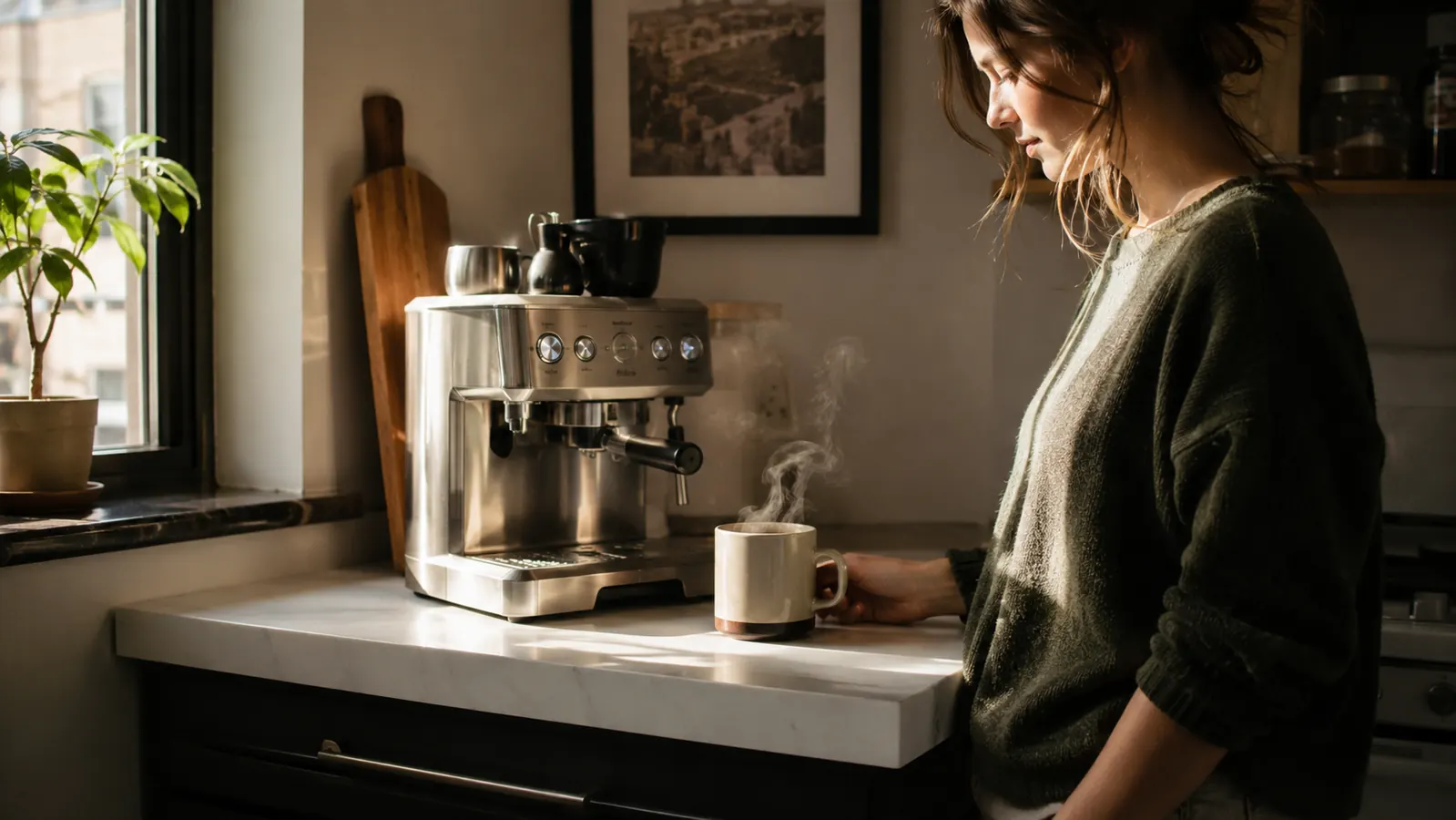
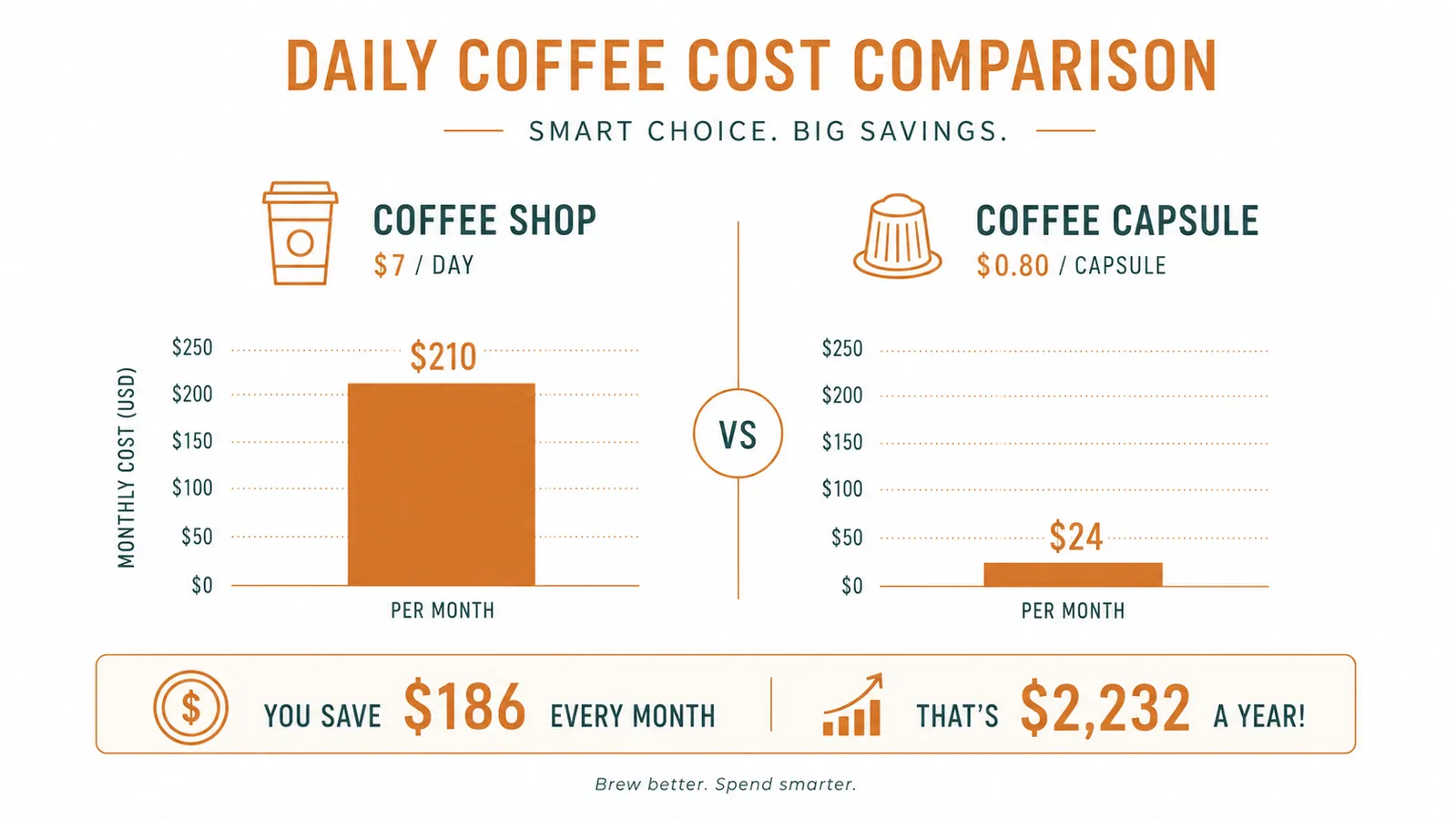
For about two years, I stopped at the same coffee shop every morning on my way to work. Large oat milk latte. Sometimes a drip coffee backup for the afternoon. I tracked my spending once, out of morbid curiosity, and landed on $183 in a single month. Not counting tips. I knew it was a problem, but the alternative felt worse: those countertop drip machines that make something vaguely coffee-colored and lukewarm. My apartment kitchen measures roughly 8 feet of counter space total, shared with a microwave, a cutting board, and whatever groceries I haven't unpacked yet. There was no room for a machine the size of a small appliance store, and honestly, no room in my budget for something that made mediocre coffee anyway. The thing that finally got me to quit that habit was a Nespresso Essenza Mini narrow enough to tuck in a corner, though I resisted the idea for months.
I had looked at pour-over setups, French presses, stovetop moka pots. All of them required either gear I didn't have, counter space I didn't have, or a level of morning patience I definitely didn't have. I'm not a person who wants to fiddle with bloom times before 7am. I wanted to press a button and get a real shot of espresso. That felt like a reasonable ask.
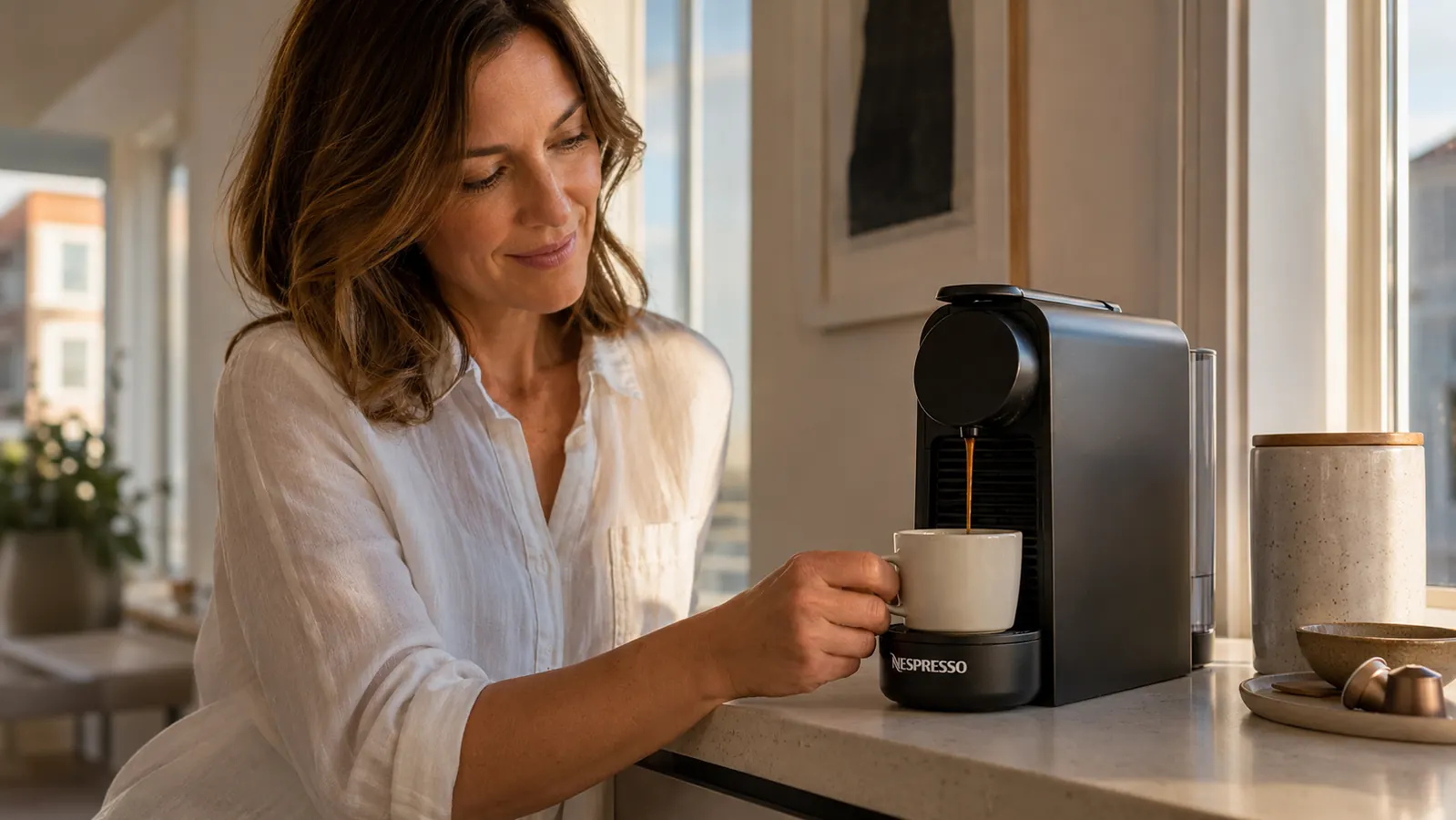
A coworker who lives in a studio apartment in the same neighborhood mentioned she had switched to a capsule espresso machine about six months earlier and had not been back to the coffee shop since, except occasionally as a treat. She said the machine was about the size of a wine bottle lying on its side. That detail stuck with me.
Still paying daily coffee shop prices for coffee you could make in 30 seconds at home?
The Nespresso Essenza Mini fits in less counter space than a cutting board and pulls a real espresso shot in under a minute. Check today's price and see if it fits your budget.
Amazon Check Today's Price on Amazon →I ordered the Nespresso Essenza Mini by De'Longhi on a Thursday evening. It arrived Saturday morning. Unboxing it, I almost laughed at how small it was. The footprint is roughly 4.5 inches wide by 13 inches deep. It sits on my counter between the microwave and the wall, in a space that previously held a charging cable and a rogue bottle of olive oil. Setting it up took about eight minutes, most of which was running the initial rinse cycle. Then I made my first shot.
I had been spending heavily at the coffee shop each month. The machine paid for itself in five weeks. The coffee is actually better.
The shot was good. Actually good, not just acceptable. A real crema on top, the kind you only see at decent espresso bars. The machine heats up in 25 to 30 seconds from cold. You pop in a capsule, press the button, done. There is no programming, no pressure to calibrate, no grinder to clean. For someone cooking in a tiny apartment who already has too many things to maintain, that simplicity matters more than I expected.
I want to be fair about the tradeoffs. The capsules cost money, and if you drink two or three shots a day, that adds up faster than it looks on paper. Using the Original Line pods, you're looking at a modest per-capsule cost depending on where you buy them. That's cheaper than the coffee shop, but it's not free. The machine also doesn't make a latte on its own. You need a separate frother for milk drinks, which is another small appliance to consider. And the water reservoir holds about 20 ounces, so if you're making coffee for two people every morning, you'll be refilling it often. These are real limitations worth knowing.
What I did not expect was how much the ritual itself would change. I stopped rushing out the door every morning because there was no coffee to pick up. I started having my espresso at the counter before I even changed out of my pajamas. The apartment started smelling like a coffee shop, which is a small pleasure I had not accounted for. My mornings got slower in a good way.
What I'd Tell You If We Were Sitting at My Kitchen Table
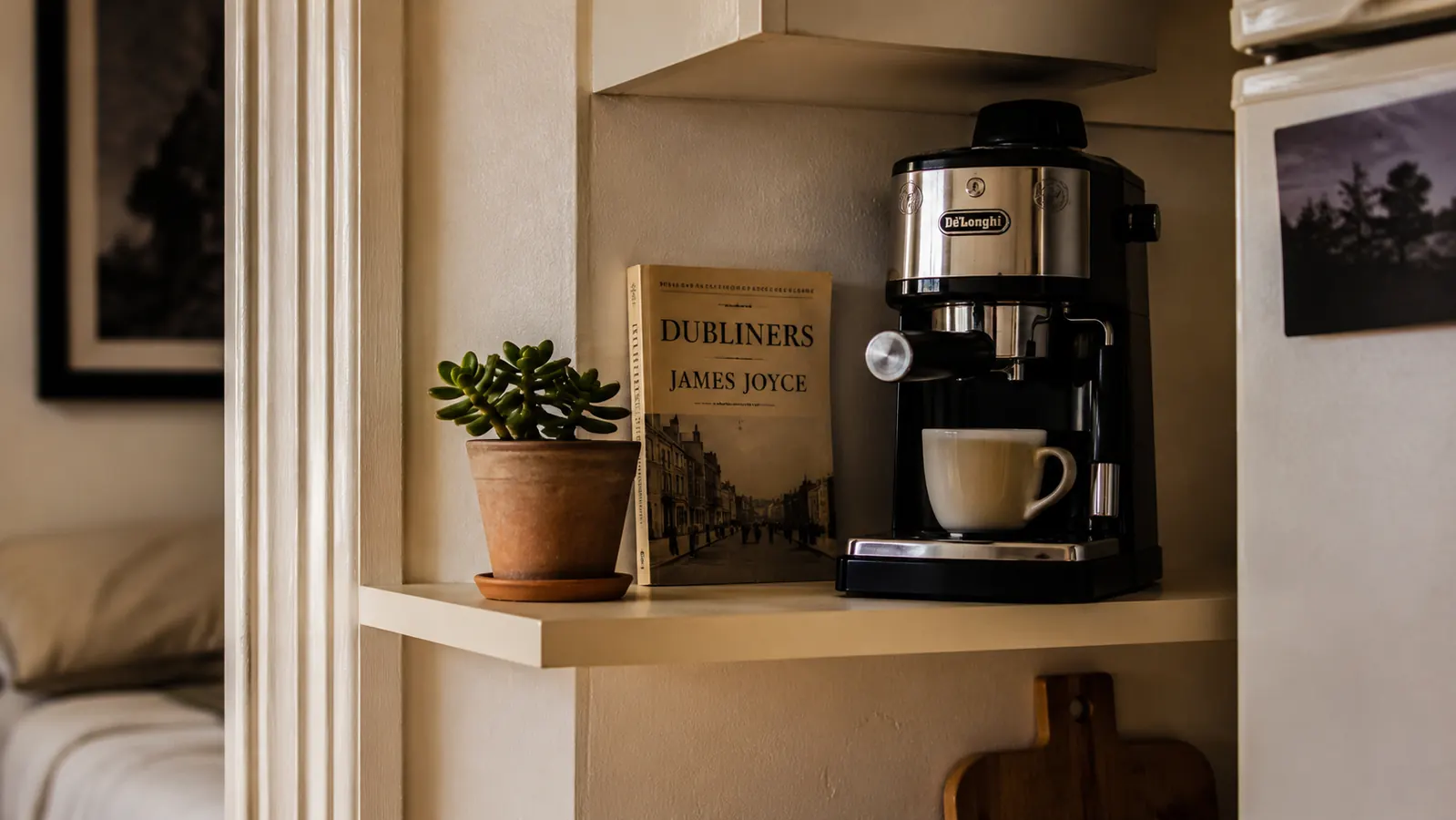
If you have a real espresso habit and a small kitchen, this machine solves a specific problem very well. It makes quality espresso in minimal space with minimal effort. It does not try to do everything. The build feels solid, the buttons are simple, and after seven months of daily use, mine still works exactly as it did out of the box. For a small apartment, that consistency matters.
If you're hoping to replicate a full cafe menu at home, you'll need to add a milk frother and budget for regular capsule orders. If you're fine with straight espresso or Americanos, this machine covers you completely. I'd also say: if you are on the fence about the capsule cost, run your own math first. Check what you spend at the coffee shop in a month, then compare. For most daily coffee shop visitors, the machine pays for itself in well under two months. After that, every morning is gravy.
It's a narrow machine that does one thing well. In a small kitchen, that's exactly what you want. I've had no regrets, and the monthly coffee shop bill is a distant memory. If you want to dig into the full details on performance, capsule options, and long-term durability, I put together a thorough breakdown in my Nespresso Essenza Mini review after 12 months of daily use. And if you're still deciding whether this particular machine fits your space and routine, the 10 reasons it works well in compact kitchens covers the practical specifics without the fluff.
One small machine. Real espresso. No counter sacrifice.
The Nespresso Essenza Mini by De'Longhi is rated 4.6 stars across more than 6,000 reviews. It's the kind of appliance that earns its footprint. See today's price before you decide.
Amazon Check Today's Price on Amazon →