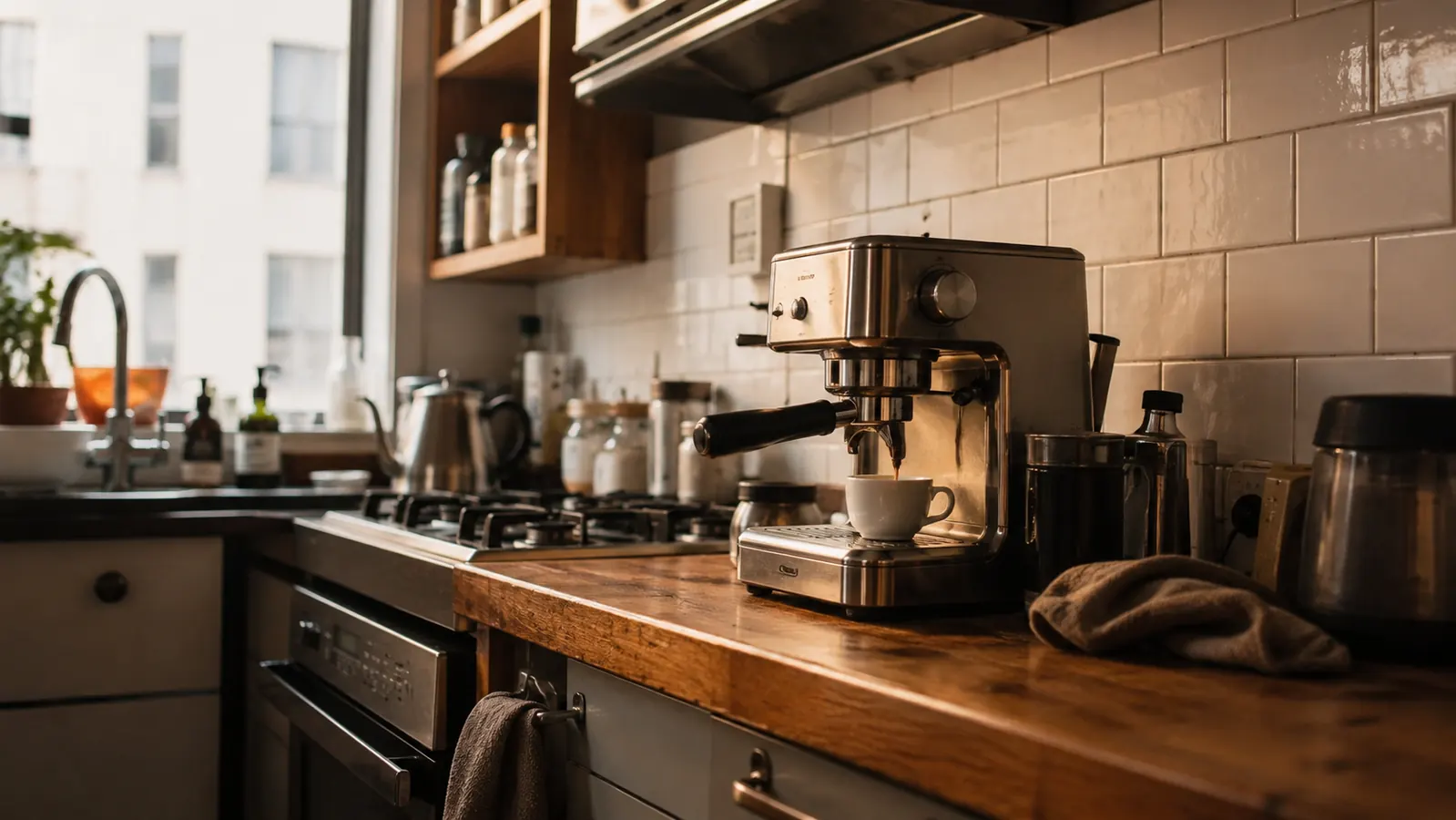
My kitchen counter is 22 inches deep and about 3 feet wide. That is the entire workspace. I have a two-burner stove, a half-size refrigerator, and exactly one free outlet. So when I decided I wanted real espresso at home, I was not shopping for the best machine. I was shopping for the best machine that would actually fit. I bought the Nespresso Essenza Mini by De'Longhi in late 2023, tucked it onto a 9-inch shelf above the toaster, and used it every single morning for the next twelve months. Here is everything I learned.
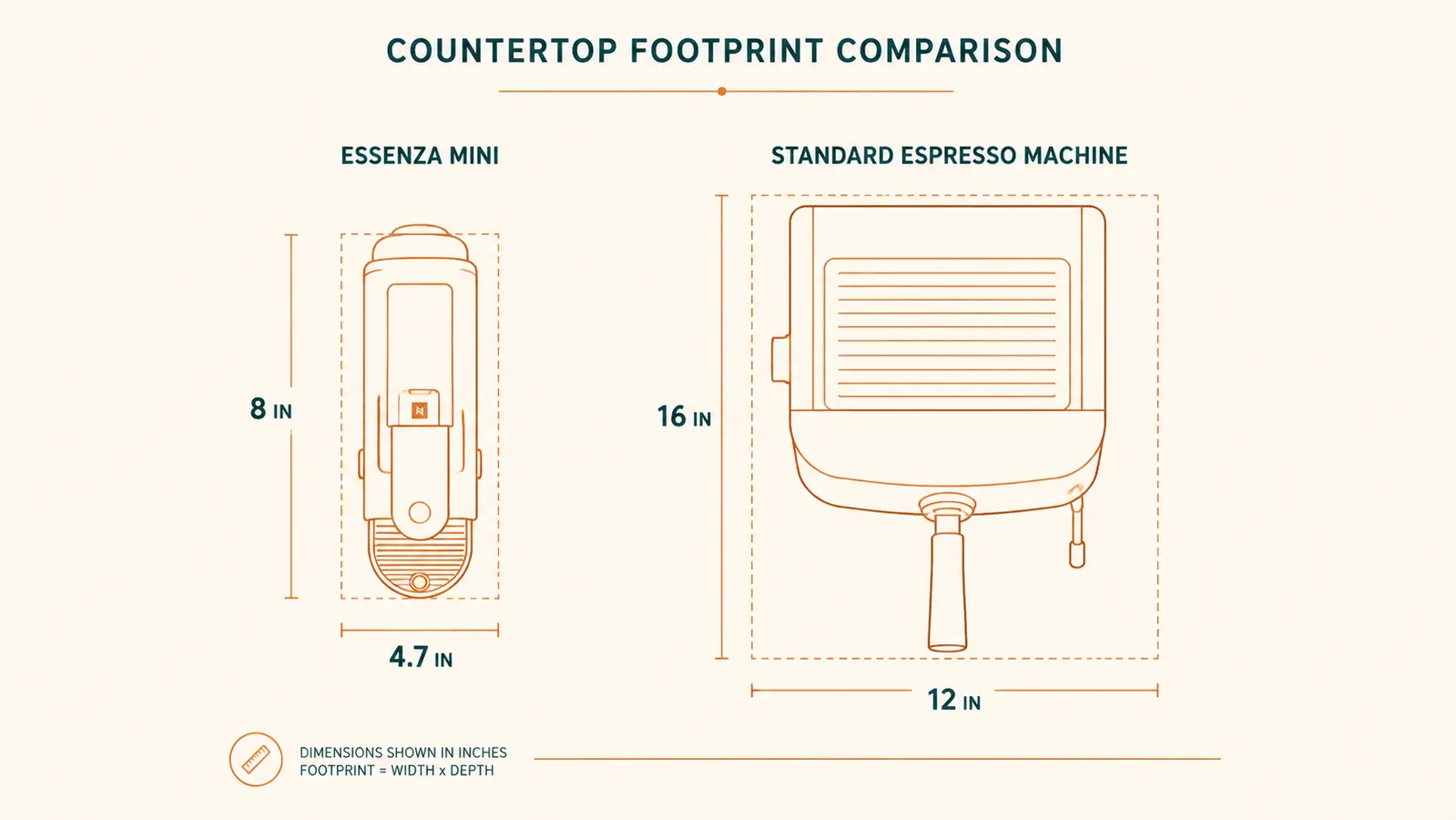
The short version: this machine does one thing and it does it well. It pulls a consistent shot of espresso in under 30 seconds, heats up in 25 seconds flat, and takes up a 4.7-by-8-inch footprint on your counter. If you are living in a studio apartment, a dorm, an RV, or any space where every square inch matters, that combination is genuinely hard to beat. The long version has some tradeoffs you should know about before you buy.
The Quick Verdict
The most counter-space-efficient way to get real espresso at home. Not a replacement for a full cafe setup, but for small kitchens it punches well above its footprint.
Amazon Check Today's Price →Already sold on the size? Counter space is the most honest reason to buy this machine.
The Essenza Mini is consistently one of the most compact Original Line Nespresso machines available. Check the current price and color options on Amazon before they shift.
Amazon Check Today's Price on Amazon →How I've Used It: 12 Months of Daily Pulls in a Galley Kitchen
My routine is simple. Every morning, I fill the 20-oz water tank, drop in a capsule, and press the espresso button. Twenty-five seconds later I have a shot. On weekends I make two shots back to back, maybe three. During the workweek I use the lungo button for a slightly longer, lighter pull that I drink while reading on my phone. That is it. No frothing wand, no steam. Just the machine doing its one job.
Over twelve months I put roughly 450 capsules through this machine. It has never jammed, never skipped a heating cycle, and never once failed to eject a used pod cleanly into the waste bin. The drip tray holds about 10 spent capsules before it needs emptying, which for my usage means emptying it every four or five days. The water tank needs a refill every two to three days depending on how many shots I pull. Neither task takes more than 30 seconds.
I descaled it twice over the year, following the light indicator. The process takes about 20 minutes and uses the Nespresso descaling kit. It is not complicated, but it is mandatory if you want consistent brew temperature over time. I skipped the first descale reminder for about three weeks and noticed the shots pulling slightly cooler. That was my mistake, not the machine's.
Size and Footprint: The Real Reason to Buy This Machine
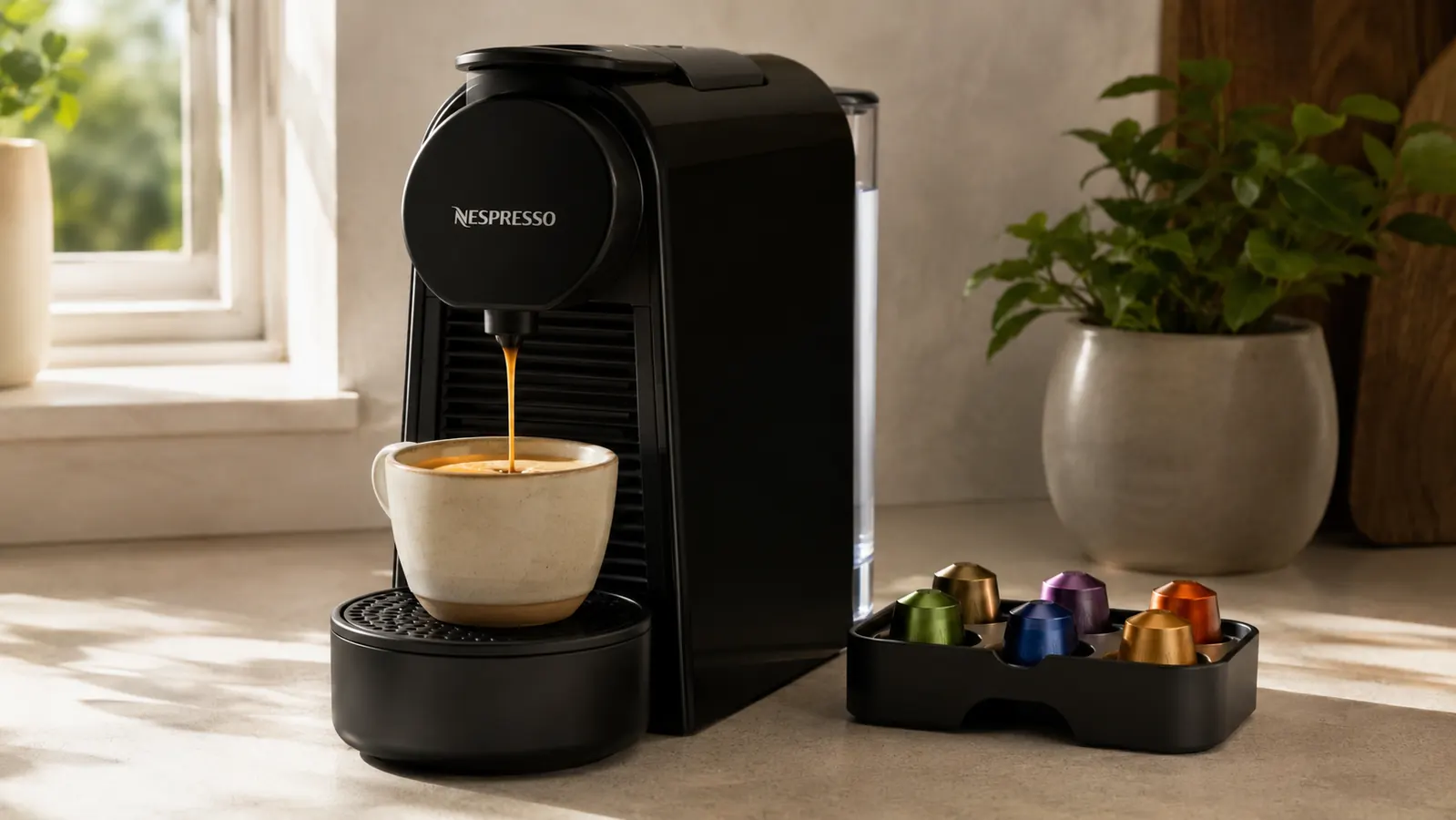
The Essenza Mini measures 4.7 inches wide by 8 inches deep by 12.8 inches tall. For comparison, a standard drip coffee maker is typically 9 inches wide and 12 inches deep. That means the Essenza Mini takes up less than half the counter footprint of a basic drip machine. In my kitchen, it sits on a narrow shelf I built from a leftover piece of butcher block. It would not fit anything else up there. The Essenza Mini fits with room to spare.
The machine comes in several colors including black, white, and a red that is genuinely attractive if you want something that reads as a design piece rather than an appliance. I have the matte black. After a year it still looks clean because there are almost no crevices for grime to collect. The capsule door, the drip tray, and the water tank all wipe down easily. I have never once pulled out a scrubbing brush.
After twelve months and roughly 450 capsules, this machine has never jammed, never skipped a cycle, and never failed to eject a pod cleanly. For a daily-use appliance in a tiny kitchen, that reliability matters more than any single feature.
Espresso Quality: Honest Assessment After a Full Year
The espresso is genuinely good. It is not cafe-quality in the sense that a skilled barista pulling a dialed-in single-origin shot would beat it. But compared to anything else you can brew at home in under 30 seconds at this price range, it is excellent. The pressure is 19 bars at the pump, and the crema is consistent and dense. I have tried probably 20 different Original Line capsule varieties over the year. The Ispirazione Roma and the Melozio are my go-to choices, both dark and smooth with a clean finish.
The machine brews at two volumes: a standard espresso at about 1.35 oz and a lungo at about 3.7 oz. You can adjust these with a manual override if you want something between those sizes, but I never bothered. The defaults are well-calibrated. The espresso button is consistent pull after pull. I have never had a watery shot or a bitter one from a capsule that should have tasted smooth.
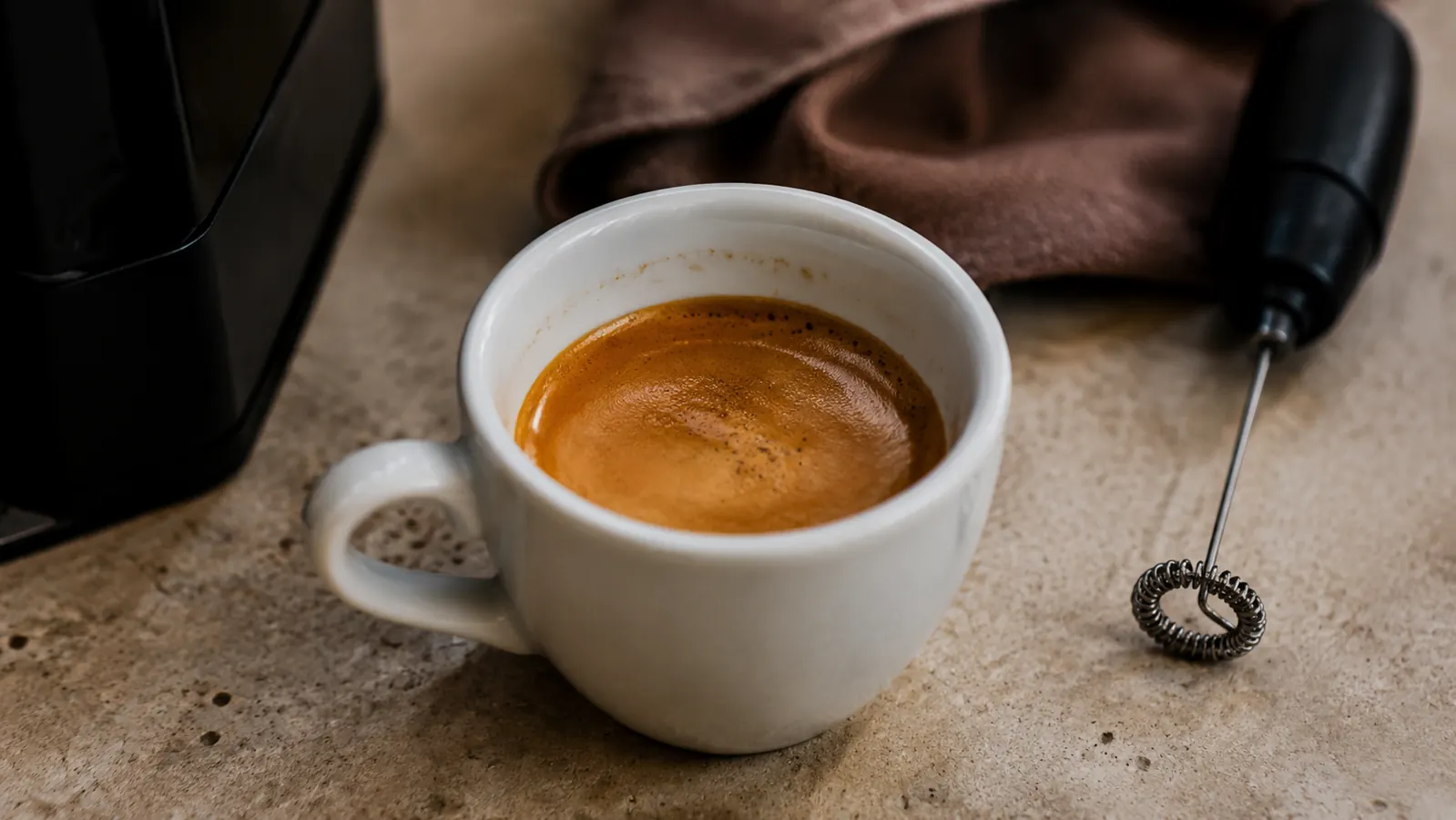
One honest note: the machine has no steam wand and no built-in frother. If you want lattes or cappuccinos, you need a separate milk frother. I bought a cheap handheld frother for about eight dollars and it works fine. But if you are expecting a full cafe experience in one box, this is not that machine. It is an espresso machine, not a latte machine.
The Capsule Cost: What Nobody Does the Math On
Here is the part most reviews skip. Nespresso Original Line capsules typically run 70 to 85 cents each when bought directly from Nespresso. At one capsule per day that is about $260 to $310 per year just in capsules. At two capsules per day, double that. There are third-party compatible capsules from brands like Peet's, Starbucks, and a few smaller roasters that sell for slightly less and are widely available at grocery stores. I have tried several. Most of them are fine. A few were noticeably worse. The Starbucks Espresso Roast pods are a solid alternative if you want to cut per-cup cost by a few cents without sacrificing much quality.
The bigger picture: if you were previously buying a daily espresso drink at a coffee shop, the math flips in your favor almost immediately. Two shots at a cafe cost somewhere between four and seven dollars depending on your city. Two capsules at home cost around $1.50. Over a year, the savings are substantial. If you are coming from making drip coffee at home, the capsule cost is a real and ongoing premium you should factor in.
What Held Up and What Surprised Me
The heating element is as fast as advertised. Twenty-five seconds from cold start to ready-to-brew is real, not a marketing claim. On busy mornings when I am running late, that matters. My previous coffee setup was a pour-over that took four minutes from boil to cup. The time savings alone justified the switch for my schedule.
The water tank position surprised me. It mounts on the back of the machine, which means you pull the machine forward to refill it. In a tight space where the machine is pushed against a backsplash, this can be slightly awkward. I solved it by leaving about two inches of clearance behind the machine at all times. Not a dealbreaker, but worth knowing if you are planning your counter layout.
The auto-off feature turns the machine off after nine minutes of inactivity. This is good for energy consumption and peace of mind. I have never once come home worried that I left the machine on. In an apartment where I am sometimes out all day, that is a small but genuine comfort.
What I Liked
- Tiny footprint at 4.7 x 8 inches. Takes up less counter space than a toaster.
- 25-second heat-up time means espresso before the fog of morning clears.
- Consistent shot quality across 450-plus capsules with zero jams or failures.
- Easy cleanup. Drip tray and capsule bin empty in under 30 seconds.
- Auto-off after 9 minutes. Never worry about leaving it on.
- Third-party capsule compatibility gives you more variety and some cost flexibility.
- Quiet for an espresso machine. Neighbors will not hear it through thin walls.
Where It Falls Short
- No built-in frother. Lattes and cappuccinos require a separate tool.
- Capsule cost adds up. Budget 70-85 cents per shot for Nespresso brand pods.
- Water tank fills from the back. Needs a couple inches of clearance behind the machine.
- Only two brew volumes. Not many options if you want something custom.
- Descaling is mandatory every few months. Skip it and shot quality drops noticeably.
- No grinder. You are locked into the capsule ecosystem entirely.
Alternatives I Considered Before Buying
Before settling on the Essenza Mini, I looked hard at two other machines. The Nespresso Vertuo Pop is slightly larger but brews both espresso and longer coffee drinks using the Vertuo capsule system. The Vertuo capsules use barcode-based brewing, which means the machine auto-adjusts settings per capsule, a nice feature, but Vertuo capsules are a bit harder to find at grocery stores and have fewer third-party options. If you want longer coffee drinks more than short espresso shots, the Vertuo Pop is worth a look. I cover the full comparison in my Nespresso Essenza Mini vs Vertuo Pop piece if you want to dig into the details.
I also briefly considered a manual stovetop moka pot. They make excellent espresso-style coffee for very little money. But in a tiny kitchen with two burners and no counter space to spare, having to babysit a moka pot while cooking breakfast did not appeal to me. The Essenza Mini frees up a burner and requires zero attention once you press the button. That convenience is worth the price premium for my specific setup.
Who This Is For
The Essenza Mini is the right machine if you have a small kitchen and want consistent espresso without a lot of setup or cleanup. Apartment renters, dorm residents, anyone in an RV or tiny home, and anyone downsizing from a larger home kitchen will appreciate how little space this takes and how reliably it works. It is also a solid pick for anyone who was spending daily money at a coffee shop and wants to cut that habit without sacrificing quality. The shot quality is good enough that I never feel like I am compromising. I feel like I made a smart decision for my space.
Who Should Skip It
If you are primarily a milk-drink person, meaning lattes, cappuccinos, and flat whites are your daily order, this machine will require an extra step and an extra tool every morning. That is manageable but worth knowing upfront. If you are a coffee enthusiast who wants to dial in grind size, extraction time, and water temperature, the capsule system will feel limiting. And if you are already happy with drip coffee and not interested in espresso specifically, the capsule cost is hard to justify versus a simple drip machine that costs a fraction of the price. For those people, I would point them toward a good pour-over or a compact drip machine instead. This machine is for people who want espresso specifically, and want it to be simple.
If counter space is your constraint, this is the espresso machine the math points to.
The Essenza Mini is small enough to fit where no other real espresso machine will, and it has held up through a full year of daily use without a single issue. Check today's price on Amazon and see the available color options.
Amazon Check Today's Price on Amazon →